
BANGKOK’S GENTLE GIANTS
Meeting Thailand’s Gentle Giants — History, Culture & Responsible Encounters
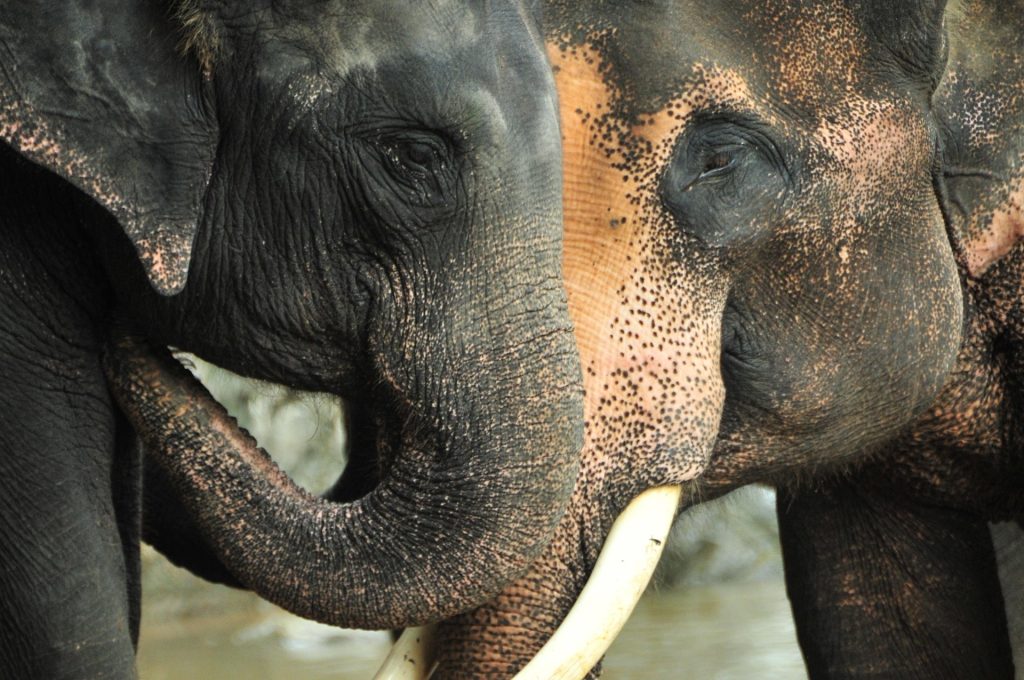
Few animals are as deeply woven into Thailand’s identity as the Asian elephant. For centuries, elephants have appeared in royal traditions, religious stories, art, warfare, agriculture and everyday life. Today, they remain one of the country’s most powerful cultural symbols — but meeting one in modern Bangkok also raises an important question: how can visitors experience these magnificent animals without contributing to their exploitation?
The answer is increasingly found in responsible elephant experiences built around observation, education and animal welfare. Bangkok and its surrounding provinces now offer several ways to encounter elephants, from purpose-built parks on the city’s eastern edge to sanctuaries and conservation projects within a few hours of the capital.
A Giant in Thailand’s History
The elephant’s importance in Siamese history goes far beyond tourism. Elephants were historically used in warfare, transport, forestry and royal ceremonies. White elephants in particular became associated with royalty and prestige. Thai history and literature also preserve stories in which elephants represent power, generosity, courage and sacred significance.
Elephants also have a strong place in Buddhist and Hindu-influenced traditions. The Thailand Foundation notes, for example, that the Vessantara Jataka — an important Buddhist story — centres on the gift of a white elephant and uses the story to explore generosity and selflessness. Elephant imagery also appears throughout Thai art and the mythical creatures of the Himmapan tradition.
For modern visitors, it is useful to remember that the elephant is not simply a colourful tourist symbol. It carries centuries of cultural meaning.
Bangkok and the Elephant Today
Bangkok itself is not Thailand’s traditional elephant heartland, but the capital has become an important starting point for visitors who want to encounter elephants. Several facilities in and around the city offer programmes ranging from feeding and observation to guided walks and educational activities.
There is, however, an important distinction between seeing elephants and interacting with them. A 2026 World Animal Protection assessment of 236 elephant tourism venues in Thailand, covering 2,849 elephants, found that around two-thirds were living in poor conditions. The organisation also reported that riding, shows and forced close-contact activities remain concerns, while observation-only experiences are growing.
That makes the choice of venue particularly important. The word ‘sanctuary’ by itself does not guarantee good welfare.
Where to Meet Elephants in the Bangkok Area
Bangkok Elephant Park — Nong Chok
On the eastern edge of Bangkok, in Nong Chok, Bangkok Elephant Park offers visitors a chance to spend time around elephants in a forest-like environment of ponds, open fields and hillsides. The park describes its programmes as centred on feeding, observation, conservation and Thai cultural experiences.
Where: Suwinthawong Road, Krathum Rai, Nong Chok, Bangkok. The facility is approximately an hour or more from central Bangkok depending on traffic. Programmes are generally arranged in morning or afternoon sessions.
Why go: Convenient for travellers who want an elephant experience without leaving Bangkok proper. Check the current programme and welfare practices before booking.
Bangkok Elephant Sanctuary — Bangkok
Another option is Bangkok Elephant Sanctuary, which describes itself as a family-run facility in the city’s eastern area. Its current programmes focus on observing and feeding elephants in a natural environment, with short morning and afternoon experiences and transfers available.
Where: Krathum Rai, Nong Chok, Bangkok 10530.
Why go: A relatively accessible option for visitors who want a shorter encounter. Ask exactly what activities will take place on the day and whether participation is optional for the elephants.
Living Green Elephant Sanctuary — Day Trip from Bangkok
For travellers prepared to spend more time on the road, Living Green Elephant Sanctuary in the Khao Kheow area of Chonburi is marketed as a day-trip experience from Bangkok. Programmes emphasise feeding, walking alongside elephants and learning about their care.
Where: Khao Kheow, Chonburi, roughly 1.5–3 hours from Bangkok depending on traffic and pickup point.
Why go: It combines an elephant encounter with a greener, more rural setting. Confirm the current programme before booking, particularly regarding bathing and direct contact.
Kanchanaburi — Elephant Experiences Beyond the Capital
Kanchanaburi, west of Bangkok, offers another important option for elephant-focused day trips. World Animal Protection currently lists Somboon Legacy Foundation in Kanchanaburi among venues that meet its elephant-friendly guidelines. Such experiences are generally more suitable for travellers willing to devote a full day to the journey.
Why go: The surrounding landscapes of Kanchanaburi provide a dramatically different backdrop from Bangkok, with forests, rivers and rural communities.
Wildlife Friends Foundation Thailand — Phetchaburi
Further southwest of Bangkok, Wildlife Friends Foundation Thailand in Phetchaburi is another organisation listed by World Animal Protection among venues offering higher-welfare practices, with some forms of supervised interaction. It has a broader wildlife-conservation focus rather than being solely an elephant attraction.
Why go: For visitors interested in the bigger picture of wildlife rescue, rehabilitation and conservation rather than an elephant-only tourist activity.
How to Choose an Elephant Experience
The most important advice is simple: research before you book. Responsible elephant tourism is evolving quickly, and marketing language can sometimes make very different experiences sound identical.
- Look for venues that prioritise observation and allow elephants meaningful choice about whether to approach visitors.
- Avoid elephant riding, circus-style shows, painting, football and other performances.
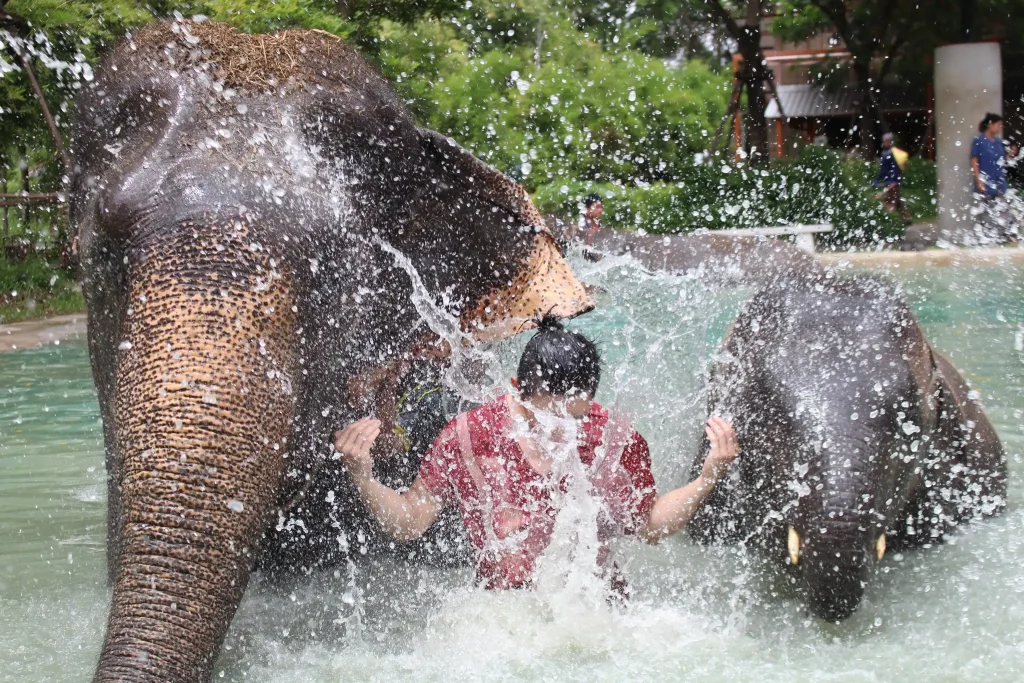
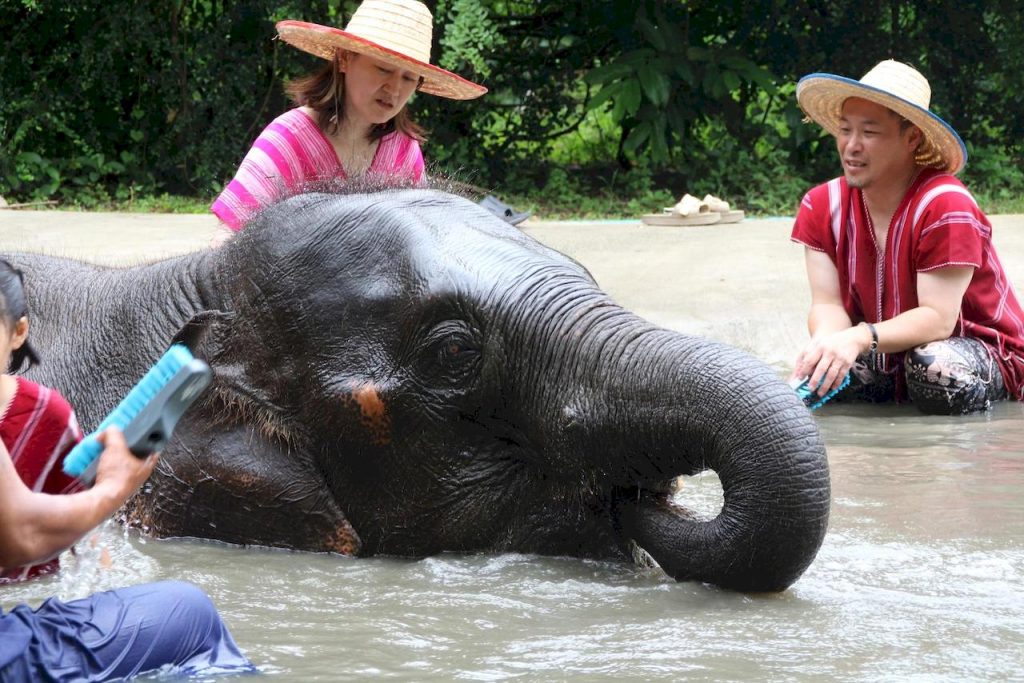
- Be cautious about bathing or washing programmes. World Animal Protection reports that these activities have increasingly been marketed as ethical alternatives, even though they can still involve forced interaction.
- Ask how the elephants spend the rest of the day when tourists are not present: Are they able to move, forage and socialise naturally?
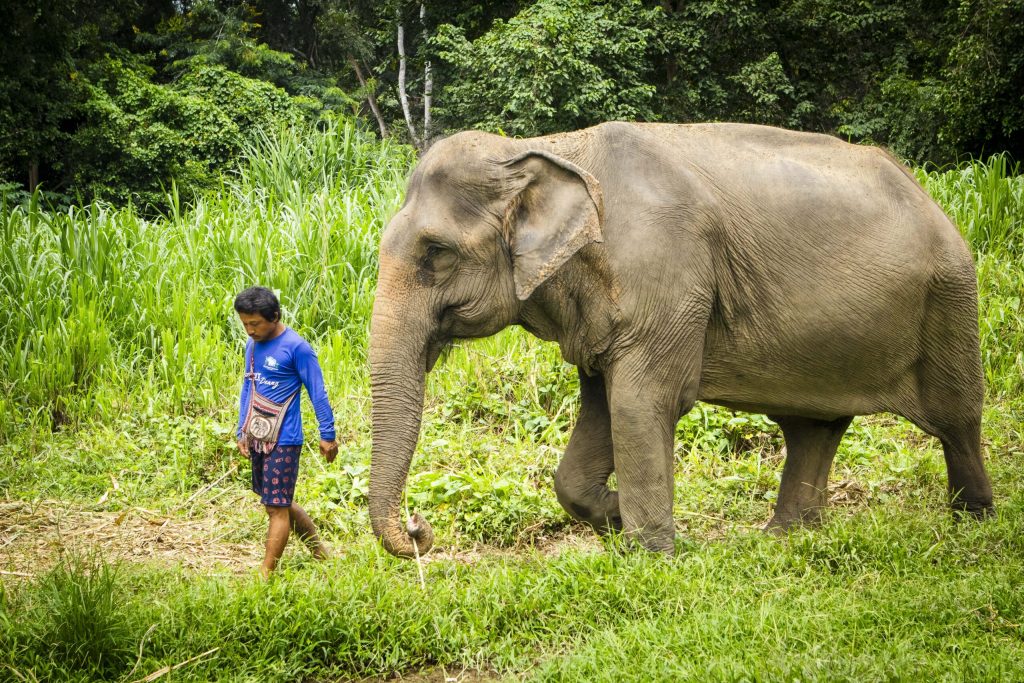
- Choose smaller groups where possible and follow the mahout or guide’s instructions.
- Never shout, chase, corner or touch an elephant simply because you want a photograph.
- Do not bring food unless the venue specifically permits it, and only feed under staff guidance.
The Golden Rule: Let the Elephant Decide
The most memorable elephant encounter may be the one in which you do the least. Watch an elephant slowly pull grass from the ground. See its trunk investigate a new smell. Listen to the deep rumble between members of the herd. Observe the way an elephant uses its ears, trunk and feet to communicate.
A good experience does not need an elephant to perform for you. In fact, the magic comes from seeing natural behaviour — an animal simply being an elephant.
Visitors should also dress for the weather, bring sun protection, wear comfortable shoes and expect mud, dust and tropical heat. Keep voices low and movements calm. Elephants are enormously powerful animals, and even a friendly encounter requires space and respect.
A Different Kind of Bangkok Memory
Bangkok can overwhelm the senses: traffic, neon, temples, rooftop bars, markets and endless movement. An encounter with an elephant offers a completely different rhythm.
For a few hours, the city seems to disappear. There is the sound of leaves moving, the crunch of vegetation, the splash of water and the slow, deliberate footsteps of an animal that has occupied a special place in Thailand for generations.
The real luxury is not getting closer. It is being close enough to understand.
When experienced responsibly, meeting elephants can become more than a holiday photograph. It can be an introduction to Thai history and culture, an opportunity to support better welfare practices, and a reminder that some of the most extraordinary travel experiences happen when we allow wildlife to remain wild in spirit.
Before You Go
Because elephant venues and their programmes can change, check the operator’s current welfare policy, activities, location, transfer arrangements and opening times before travelling. World Animal Protection’s 2026 elephant-friendly guide is a useful independent starting point for understanding welfare-focused practices.