
Bangkok’s Temples: A Journey Through Faith, Art and Living History
Bangkok is a city of extraordinary contrasts. Glass towers rise above bustling streets, longtail boats glide along the Chao Phraya River, markets come alive with colour and aroma—and around almost every historic corner, a golden roof, soaring chedi or intricate temple façade offers a glimpse into another side of Thailand.
The city is home to hundreds of Buddhist temples, known as wats, many of them still functioning as active places of worship. They are not simply monuments created for tourists. They are places where people come to pray, make offerings, celebrate festivals, seek guidance, learn, meditate and connect with their spiritual traditions.
For visitors, exploring Bangkok’s temples is therefore much more than sightseeing. It is an opportunity to experience the history, craftsmanship, spirituality and everyday culture that have helped shape the Thai capital.
Where Bangkok’s spiritual story began
Modern Bangkok grew around the Rattanakosin area after King Rama I established the new capital in 1782. The Grand Palace and Wat Phra Kaew became the symbolic heart of the new city, while temples such as Wat Pho were restored and expanded into important royal and cultural institutions.
Over the centuries, Bangkok’s temples became much more than religious buildings. They served as centres of education, traditional medicine, artistic expression and community life. Their walls preserve murals, inscriptions and sculptures, while their architecture reflects centuries of Thai craftsmanship and cultural exchange.
One of the most fascinating aspects is the mixture of influences. Thai temple architecture frequently incorporates Chinese decorative elements, while materials, artistic techniques and architectural ideas travelled to Bangkok through centuries of regional trade and cultural contact.
The result is a cityscape unlike anywhere else: brilliant mosaics beside ancient murals, enormous Buddha images beneath elaborately decorated roofs, and peaceful courtyards hidden only minutes from some of Asia’s busiest streets.
The temples not to miss
Wat Phra Kaew – The Temple of the Emerald Buddha
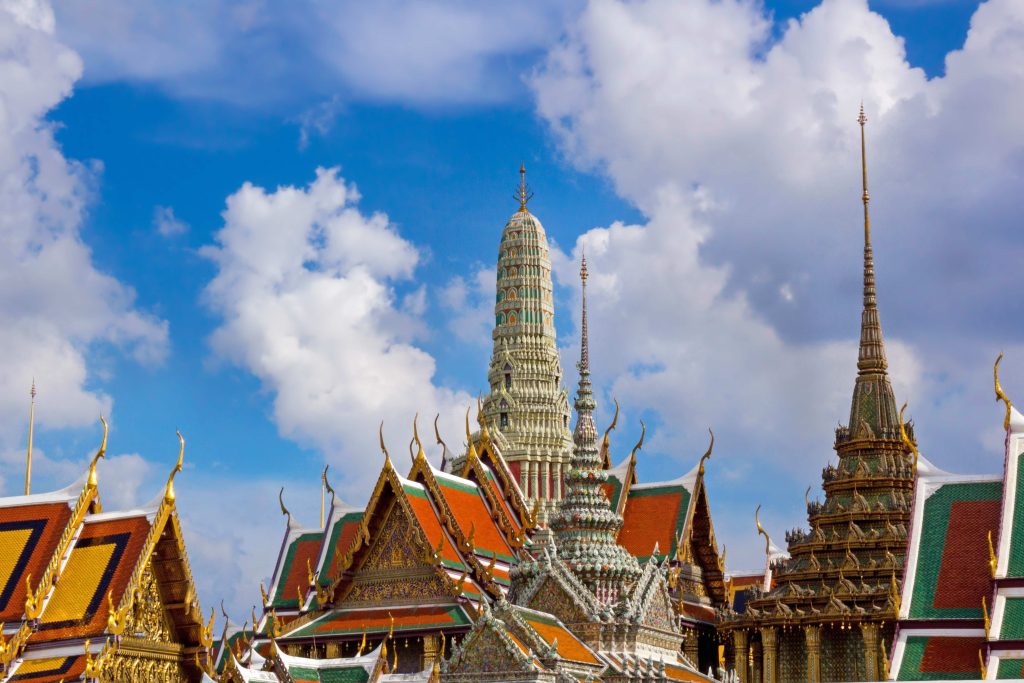
Located within the Grand Palace complex, Wat Phra Kaew is regarded as Thailand’s most sacred temple. At its centre is the revered Emerald Buddha, a small but enormously significant Buddha image carved from jadeite.
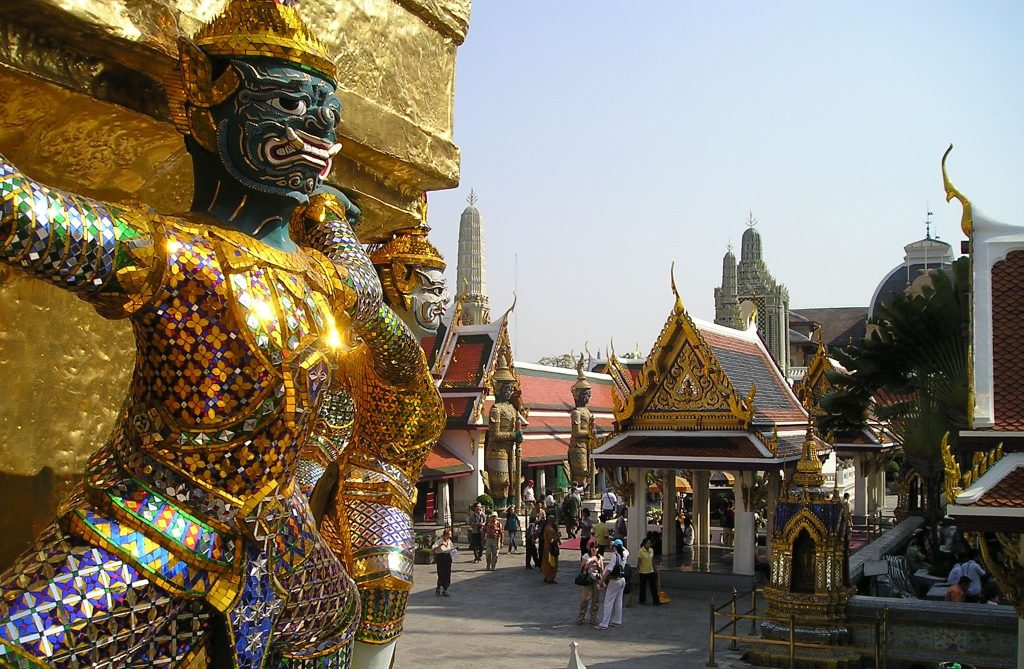
The temple itself is spectacular. Golden details, colourful tiled roofs, guardian figures and elaborate murals create an almost overwhelming visual experience.
This is a place to slow down and look closely. The murals and architectural details tell stories from Thai and Buddhist traditions, while the temple’s position within the Grand Palace complex connects religion with the history of Thailand’s monarchy.
Where: Grand Palace, Phra Nakhon
Good to know: Dress particularly respectfully here; shoulders and knees should be covered.
Wat Pho – The Temple of the Reclining Buddha
Just south of the Grand Palace lies Wat Pho, one of Bangkok’s great cultural treasures.
Most visitors arrive to see the extraordinary Reclining Buddha, measuring approximately 46 metres long and 15 metres high. Its enormous gilded form fills the building, while the feet are decorated with intricate mother-of-pearl inlays depicting 108 auspicious symbols.
But the Reclining Buddha is only part of the story. Wat Pho became an important centre for knowledge during the early Rattanakosin period. Inscriptions record traditional knowledge including medicine and Buddhist teachings, and the temple became closely associated with the development and preservation of traditional Thai massage.
Where: Sanam Chai Road, beside the Grand Palace
Tip: Combine Wat Pho with Wat Phra Kaew and then cross the river to Wat Arun.
Wat Arun – The Temple of Dawn
Few sights in Bangkok are as instantly recognisable as Wat Arun rising beside the Chao Phraya River.
The temple dates back to the Ayutthaya period and played an important role during the Thonburi era. Its magnificent central prang is decorated with porcelain and ceramic fragments, creating a remarkable surface that catches the changing Bangkok light.
Visit in the morning to experience the temple in softer light—or come towards sunset and watch its silhouette glow as the city begins to sparkle across the river.
And don’t forget to look beyond the famous central tower. The surrounding sculptures, guardian figures and architectural details reward visitors who take their time.
Where: West bank of the Chao Phraya River, Bangkok Yai
Tip: Take a river boat from the Tha Tien area for a memorable arrival.
Wat Saket – The Golden Mount
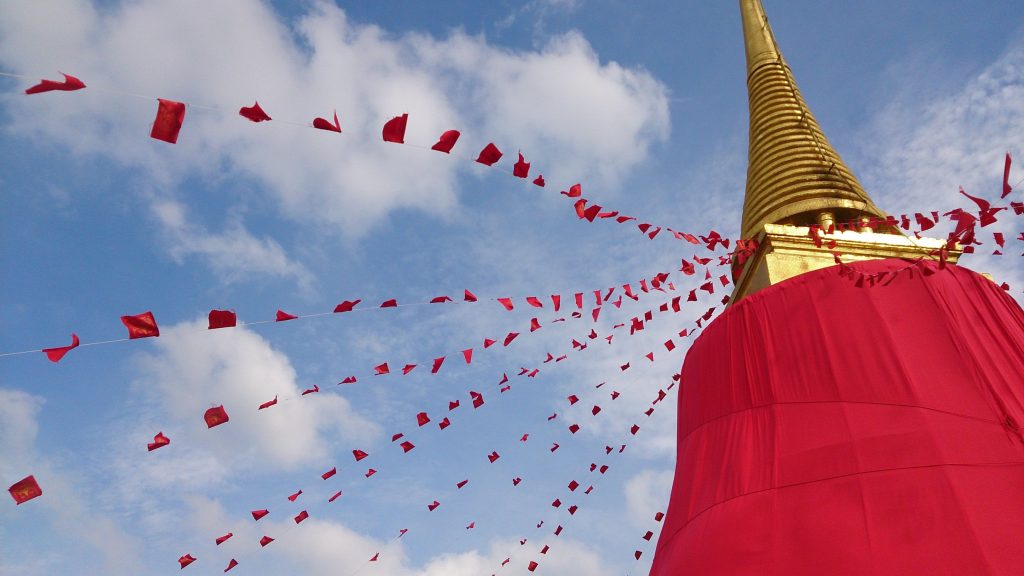
For a completely different experience, head to Wat Saket and climb the Golden Mount, or Phu Khao Thong.
The temple’s golden chedi sits atop an artificial hill, reached by a winding staircase. The climb is part of the experience, taking visitors through greenery and around the hill before reaching the summit and its panoramic views over old Bangkok.
It is particularly atmospheric in the early morning or late afternoon, when the heat is more manageable and the city takes on a softer glow.
Where: Pom Prap Sattru Phai district
Tip: Wear comfortable shoes and take your time on the climb.
Wat Benchamabophit – The Marble Temple
Elegant, refined and almost dazzling in its symmetry, Wat Benchamabophit is one of Bangkok’s most beautiful temples.
Known internationally as the Marble Temple, its main ordination hall uses Italian marble alongside traditional Thai architectural forms. The combination creates a fascinating meeting of European material and Siamese design.
Inside and around the temple are Buddha images representing different artistic periods, while the surrounding grounds offer a quieter experience than some of Bangkok’s busiest attractions.
Where: Dusit district, Rama V Road
Tip: Early morning can be especially atmospheric.
Wat Traimit – Home of the Golden Buddha
Near Bangkok’s Chinatown, Wat Traimit is famous for its remarkable Golden Buddha.
The temple provides an interesting link between Bangkok’s Thai and Chinese communities and is an excellent stop when exploring Yaowarat and the surrounding streets.
Its location also makes it easy to combine temple sightseeing with Chinatown’s food, markets and vibrant street life.
Where: Near Chinatown, Samphanthawong
Tip: Visit the temple and then explore Yaowarat afterwards.
Wat Suthat – Grand architecture and the Giant Swing
Wat Suthat is one of Bangkok’s oldest and most architecturally impressive temples. Its enormous Buddha image, detailed murals and elegant proportions make it a fascinating stop for anyone interested in Thai art and religious architecture.
Outside stands the famous Giant Swing, one of Bangkok’s historic landmarks.
Where: Phra Nakhon district
Tip: Combine it with nearby Loha Prasat and the historic streets around Rattanakosin.
Visiting Bangkok’s temples: a few golden rules
A temple visit should be approached with the same respect as visiting any place of worship.
- Dress modestly. Cover shoulders and knees, and avoid very short or revealing clothing. Some temples have particularly strict requirements.
• Remove your shoes when required. If you see shoes lined up outside an interior space, follow the local custom.
• Keep your voice down. People may be praying or meditating even when the temple is busy with visitors.
• Never climb on religious structures or touch statues and sacred objects. These are active religious sites, not simply photographic backdrops.
• Be considerate when taking photographs. Ask before photographing monks or worshippers, and follow signs concerning photography.
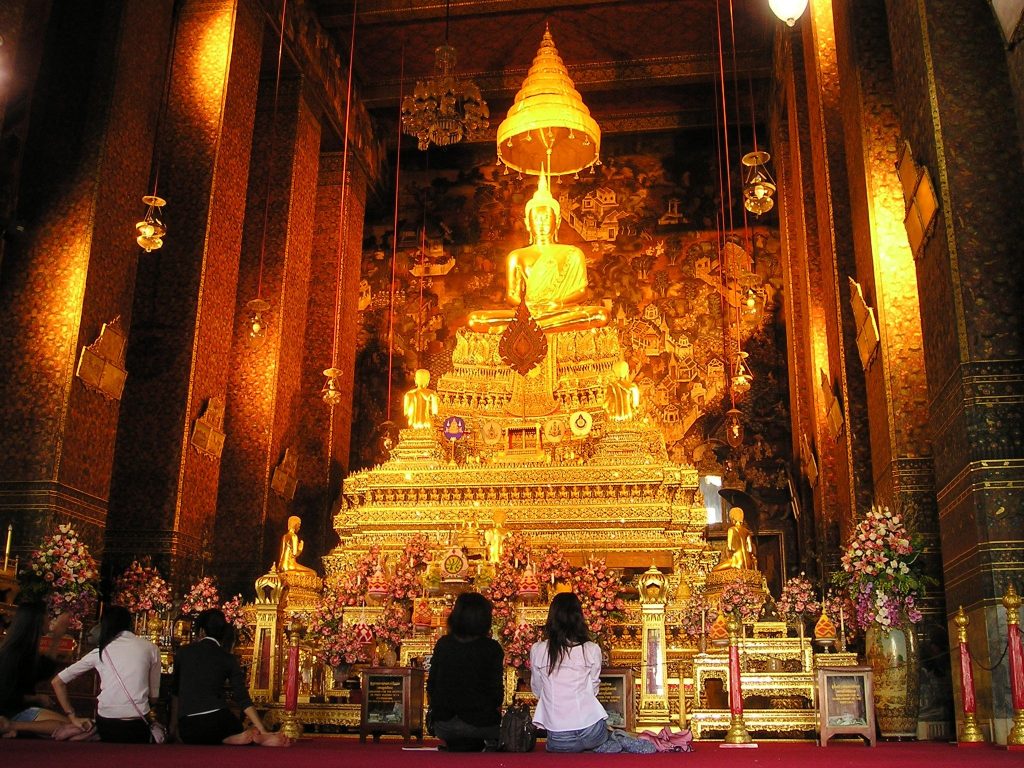
And perhaps most importantly, don’t rush. Bangkok’s temples reveal themselves slowly. Look at the roof decorations. Study the murals. Notice the guardian figures. Listen to the bells. Watch devotees make offerings. Sit quietly for a few minutes.
That is when the experience changes from sightseeing into something much more meaningful.
A temple trail through Bangkok
For first-time visitors, an excellent day could begin at Wat Phra Kaew and the Grand Palace, continue to Wat Pho, and then cross the Chao Phraya River to Wat Arun.
Another day could explore Wat Saket, Wat Suthat and the surrounding historic Rattanakosin neighbourhood before heading towards Chinatown and Wat Traimit.
And if you have time, make your way north towards Wat Benchamabophit and the elegant Dusit area.
Bangkok’s temples are not frozen pieces of history. They are living places, continuously woven into the life of the city.
Perhaps that is their greatest magic.
Between the gold-covered Buddha images, ancient inscriptions, incense-filled prayer halls and brilliant riverside architecture, Bangkok offers something far more memorable than a collection of beautiful photographs. It offers a journey through the spiritual and cultural heart of Thailand—one temple, one story and one quiet moment at a time.