
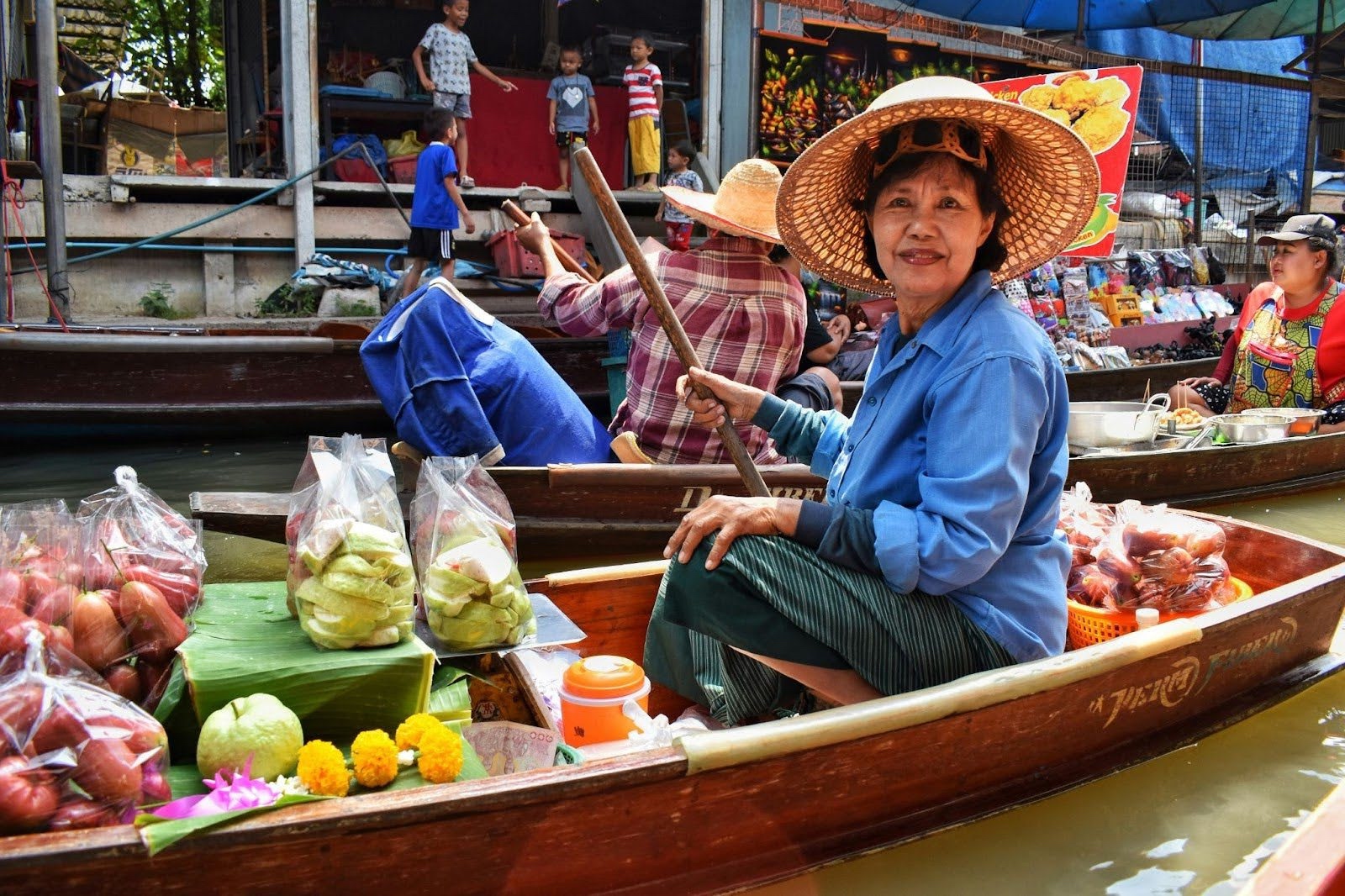
A colourful voyage through Thailand’s floating markets
Bangkok has a talent for turning an ordinary shopping trip into a full-blown adventure. In the city’s floating markets, the aisles are canals, the shopfronts are boats and the person selling your breakfast may be steering a long-tail craft with one hand while ladling coconut pancakes with the other. It is commerce with a current — noisy, fragrant, gloriously chaotic and best approached with an appetite and a sense of humour.
A market born of the waterways
Long before Bangkok became a city of flyovers, shopping malls and traffic jams that seem to have achieved permanent residency, its canals were the region’s roads. The Chao Phraya River and an intricate network of khlongs linked homes, orchards, farms and communities. Boats carried people and produce; markets naturally gathered where waterways met and daily life flowed past.
A floating market is exactly what it sounds like: a waterside marketplace where vendors sell from boats, from canal banks, or from a lively mixture of both. Some remain closely connected to local communities and traditional trade. Others have developed into visitor attractions, with food stalls, souvenir shops, photo spots and organised boat tours. The best-known markets are not all alike, and that is part of the fun: one may feel like a working neighbourhood, another like a weekend street party that happens to float.
What’s in the boat?
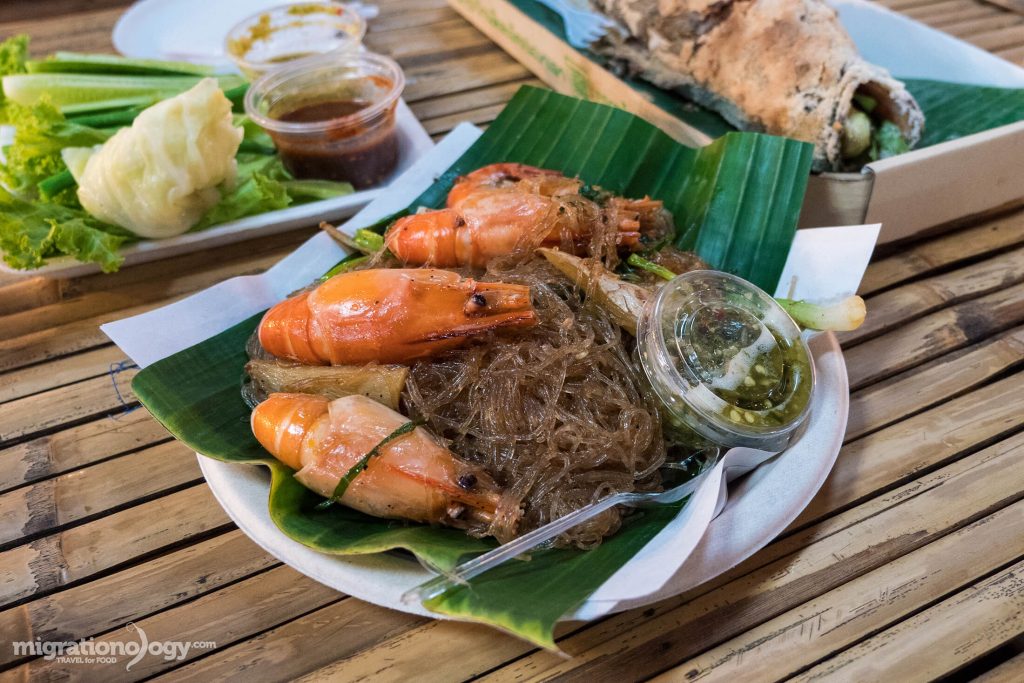
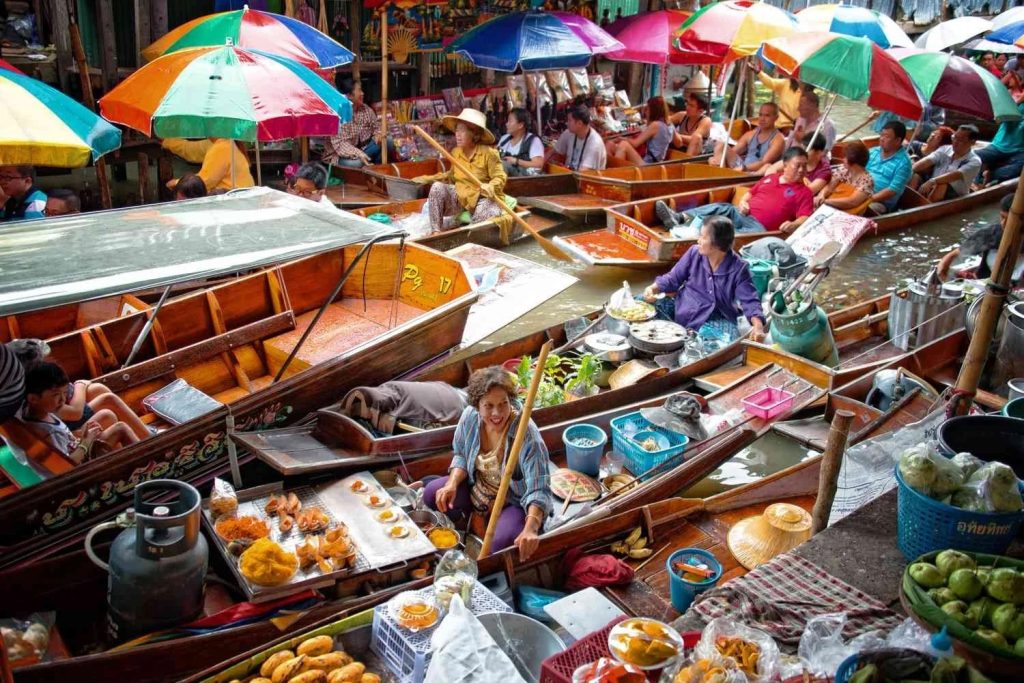
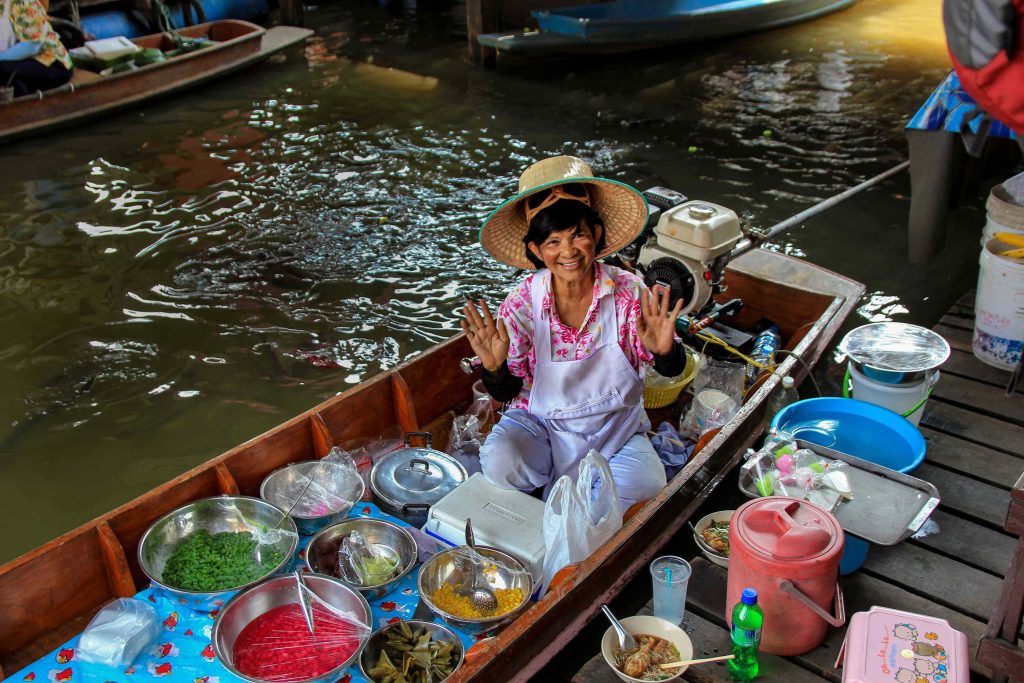
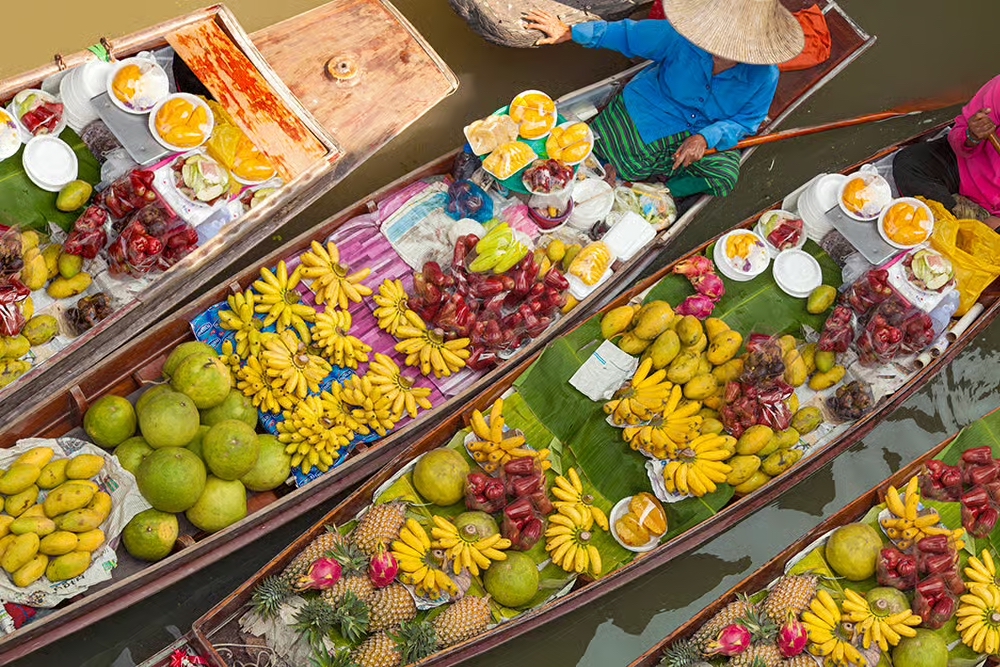
 Food is the star. Look out for bowls of boat noodles, grilled river prawns, skewers sizzling over charcoal, fried fish, spicy papaya salad, mango with sticky rice, fresh tropical fruit and little coconut pancakes known as khanom krok. Vendors may prepare dishes right in the boat, balancing pots and pans with a confidence that would make a restaurant chef ask for a lie-down.
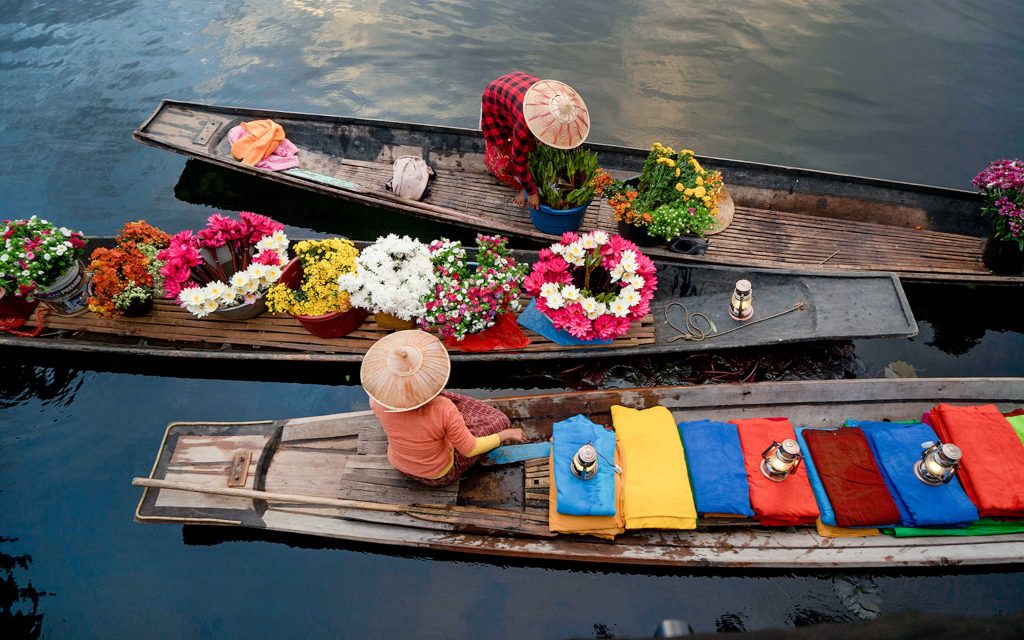
There are also vegetables, herbs, flowers, snacks, handmade crafts, woven bags, ceramics, clothing, wooden souvenirs and the occasional object you never knew you needed until it appeared in front of you. Some stalls are aimed squarely at visitors, so compare prices before buying. For food, follow the queue of locals where possible, choose freshly cooked dishes and carry small notes — it makes paying from a gently rocking boat much easier.
The theatre of the canal
The atmosphere is half the attraction. Engines putter, boatmen call to one another, vendors sing out their offers and the air carries a shifting perfume of grilled garlic, ripe fruit, chilli, river water and coconut. A narrow canal can become a floating traffic jam, with boats edging past one another at a pace that suggests everyone is in a hurry but nobody is entirely sure where they are going.
You might be offered a cold drink by a vendor in a sun hat, then find yourself negotiating for a carved elephant while a boat piled high with bananas glides behind you. A camera-ready moment is never far away — but neither is a splash. Keep your phone secure, watch your step when boarding and remember that a canal-side plank is not the place for an ambitious fashion pose.
The art of the Thai bargain
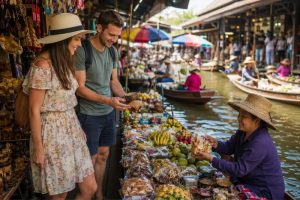 Haggling is part of the fun at many souvenir stalls, though it is not appropriate everywhere. Food and clearly priced everyday goods are usually best paid for at the stated price. For crafts and souvenirs, smile, stay relaxed and treat the exchange as a friendly conversation rather than a battle for the national budget.
A few Thai phrases can make the experience warmer — and may earn you a grin even if the price does not move. “Lot noi dai mai?” (ลดหน่อยได้ไหม) means “Could you reduce it a little?” “Paeng pai” (แพงไป) means “That’s too expensive.” “Tao rai?” (เท่าไหร่) means “How much?” And “khop khun khrap” (ขอบคุณครับ), said by a man, or “khop khun kha” (ขอบคุณค่ะ), said by a woman, means “Thank you.”
Try asking politely: “Lot noi dai mai khrap/kha?” Add a smile, not a scowl. If the seller counters, you can make a reasonable offer. If the price does not suit you, thank them and move on. A little theatrical disappointment may be entertaining; pretending to storm off like a soap-opera star is optional. Never haggle aggressively over a tiny amount — the aim is a fair deal and a good encounter, not to save the price of half a bottle of water.
Five major floating markets around Bangkok
There is no official league table ranking floating markets by size: some are extensive canal communities, while others are large weekend visitor markets. These five are among the best-known and most substantial options in and around the capital, rather than a strict measured ranking.
1. Damnoen Saduak Floating Market — Ratchaburi
The internationally famous classic, roughly 1½–2 hours’ drive southwest of central Bangkok depending on traffic. Its narrow canals, colourful boats and busy produce-and-snack trade deliver the postcard image many visitors have in mind. It is lively and heavily visited, so go early for cooler temperatures and a better chance to see activity before the busiest tour groups arrive.
2. Amphawa Floating Market — Samut Songkhram
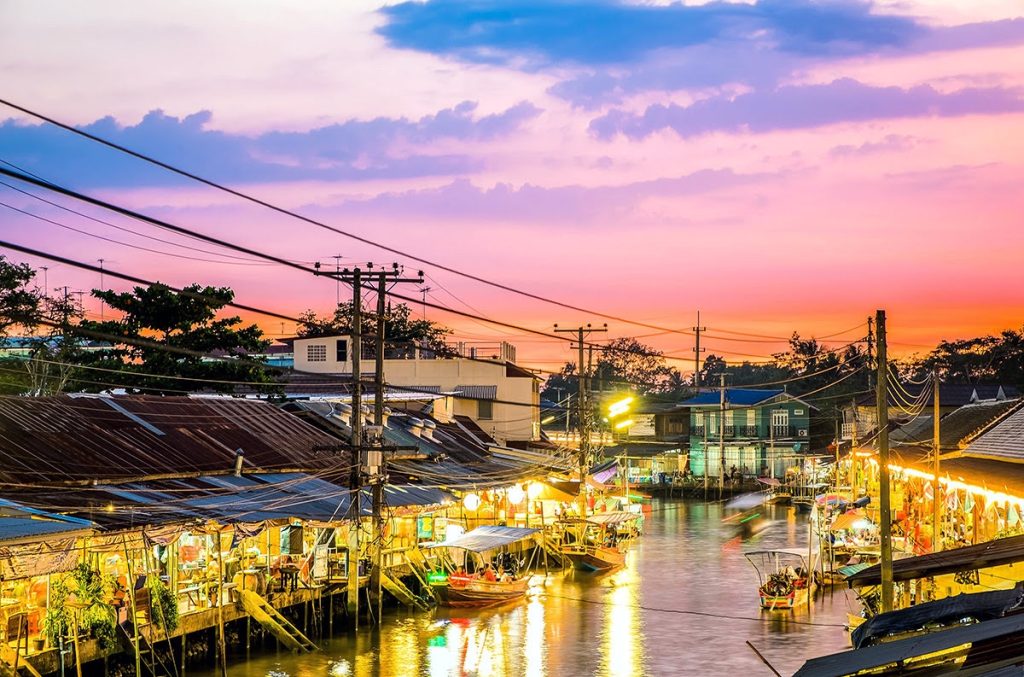
A popular, atmospheric market about 1½ hours southwest of Bangkok. Amphawa is especially associated with late-afternoon and evening visits, canal-side eateries, seafood and boat trips. It feels more like a town gathering around the water than a quick photo stop. Weekend timing is important; check operating days before setting out.
3. Khlong Lat Mayom Floating Market — Bangkok
On Bangkok’s Thonburi side, Khlong Lat Mayom is a favourite for food-focused visitors and residents. Much of the trading takes place along the canal banks, with boats adding to the scene. Expect grilled fish, Thai sweets, fruit, noodles and regional dishes. It is a strong option if you want a market experience without travelling far beyond the city.
4. Taling Chan Floating Market — Bangkok
Conveniently located on the western side of the capital, Taling Chan is a compact but well-known weekend market. Food stalls cluster beside the canal, and small boats sell or serve food nearby. It is particularly appealing for a relaxed half-day outing, with boat tours sometimes available to nearby waterways and communities.
5. Bang Nam Phueng Floating Market — Bang Kachao, Samut Prakan
Set in the green “lung” of Bangkok, Bang Nam Phueng is a leafy weekend market with a strong local feel. It is not a canal packed wall-to-wall with boats; instead, it combines waterside atmosphere with walkways, food vendors, produce and handmade goods. Pair it with cycling around Bang Kachao for a refreshing change from the city’s concrete and traffic.
Make a day of it
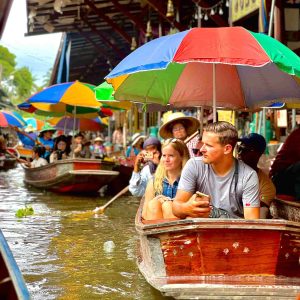 For the most traditional, boat-filled spectacle, choose Damnoen Saduak and arrive early. For an evening atmosphere and seafood, consider Amphawa. If time is short, Khlong Lat Mayom or Taling Chan offers a more convenient taste of canal-side market life within Bangkok. Bang Nam Phueng is the choice for a slower, greener day. Check current opening days and transport arrangements before travelling, as many markets operate mainly at weekends and schedules can change.
Go with cash in small denominations, comfortable shoes, sun protection and an open mind. Ask the price before ordering, agree on boat-trip costs in advance, and be considerate when photographing vendors. Most importantly, leave room for one more snack. At a floating market, “just a little taste” has a habit of becoming lunch, dessert and an unplanned second lunch.
Bangkok’s floating markets are more than colourful backdrops. They are a reminder that the city grew up facing the water, and that trade, food and conversation still find their own rhythm along the canals. Come for the photographs, stay for the flavours, and practise your Thai bargaining line. You may not get the discount you dreamed of — but you will almost certainly leave with a full stomach and a story worth telling.
Editorial note
Market scale and operating patterns vary, and there is no universally accepted ranking of the “biggest” floating markets. This selection reflects prominence, visitor scale and regional importance. Confirm current opening days, boat services and travel times before publication.