

BANGKOK: THE CITY THAT EATS
A Culinary Adventure Through Street Stalls, Historic Shophouses & Extraordinary Restaurants
Bangkok does not simply have a restaurant scene. Bangkok is a restaurant scene. Food spills onto pavements, into markets, beneath neon signs, inside elegant riverside hotels and behind unassuming shophouse doors. A smoky wok can be working beside a temple while, a few kilometres away, a chef is presenting a multi-course tasting menu built around ingredients from across Thailand.
This extraordinary range is part of what makes Bangkok one of Asia’s great food cities. The 2026 MICHELIN Guide Thailand selection includes hundreds of Bangkok-region restaurants, from street-food institutions to some of the country’s most ambitious fine-dining rooms. The guide’s inspectors also note a growing interest in regional Thai flavours, local ingredients, creative techniques and more responsible sourcing.
A City Built Around Food
Bangkok’s culinary identity grew from the meeting of many cultures. Thai traditions developed alongside Chinese, Indian, Muslim, Portuguese and other influences, while the city’s canals, rivers and markets created an enormous network for ingredients and trade.
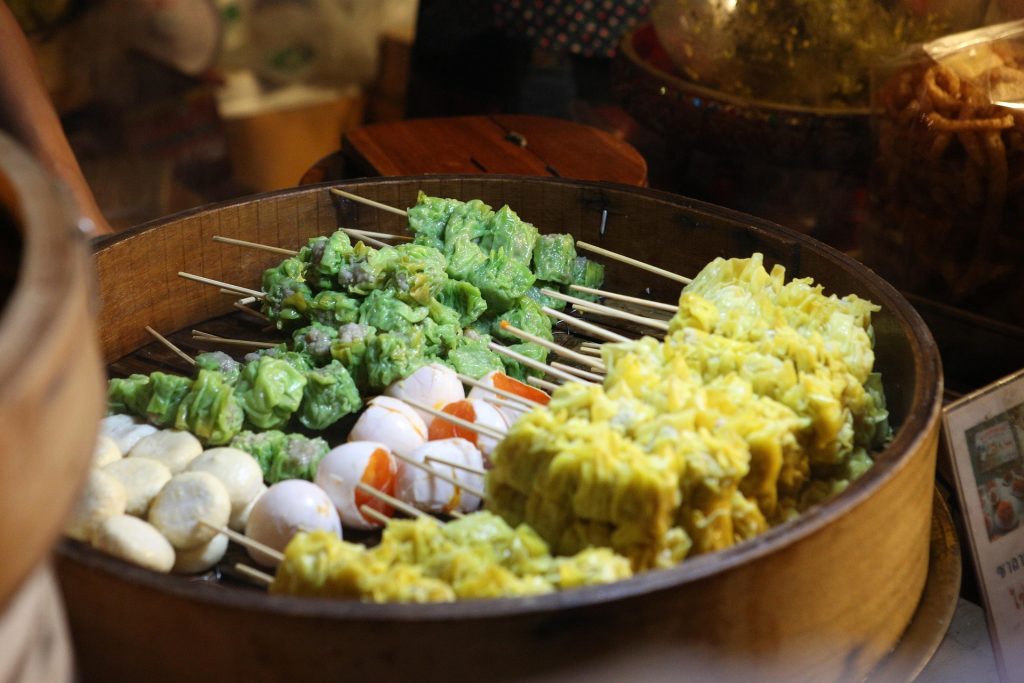
Nowhere is this more visible than Yaowarat, Bangkok’s historic Chinatown. Chinese communities have played an important role in Bangkok for more than two centuries, and their influence remains visible in the district’s architecture, markets, cooking techniques and flavours. At night, Yaowarat Road becomes an extraordinary theatre of food: seafood sizzling over charcoal, noodles tossed in woks, sweet shops glowing beneath neon signs and tiny stalls serving dishes perfected over generations.
For a visitor, the best approach is often not to choose one restaurant at all. Wander, smell, watch, taste and keep some space for the next discovery.
What Should You Eat?
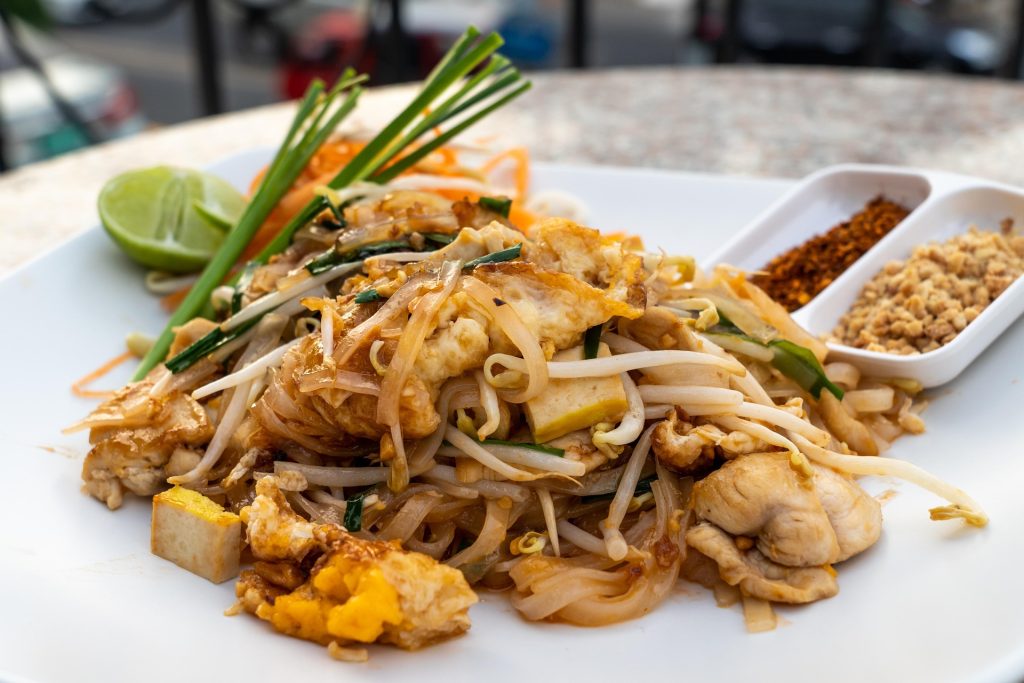
Thai food is far more diverse than the familiar green curry and pad Thai. Look for dishes that reveal different regions and traditions. Tom yum brings together hot, sour, aromatic flavours; som tam combines green papaya with chilli, lime and savoury seasoning; khao soi reflects northern Thai influences with noodles, curry and crispy toppings; while southern cuisine is often intensely spicy and rich with turmeric, seafood and herbs.
Bangkok’s Chinese-Thai food culture adds another dimension. In Yaowarat, seek out kuay jab — rolled rice noodles in a peppery broth, often served with crispy pork — oyster omelettes, fish-ball noodles, roasted meats and charcoal-grilled seafood. And never overlook dessert: mango sticky rice, coconut-based sweets, pandan custards and Thai-style Chinese pastries can be as memorable as the main course.
The secret is variety. Order several small dishes rather than one enormous meal and let the table become a culinary journey.
Ten Bangkok Restaurants & Dining Experiences to Discover
- Jay Fai — Street Food with Global Fame
327 Maha Chai Road, Rattanakosin / Phra Nakhon.
Few Bangkok restaurants have a story quite like Jay Fai. The legendary street-side kitchen became internationally famous for its charcoal cooking, distinctive goggles and huge portions of seafood. Its signature crab omelette is one of Bangkok’s iconic dishes, while wok-fried seafood and noodle dishes are also part of the experience. Jay Fai remains Michelin-starred in the 2026 guide. Expect a queue, cash payment and a very different definition of fine dining.
Why it is interesting: one of the world’s most famous examples of street food receiving Michelin recognition.
- Nusara — Intimate Thai Dining with a Historic View
Phra Nakhon / near Wat Pho.
Nusara offers a highly personal interpretation of Thai food, with a setting that can include views towards Wat Pho. The 2026 MICHELIN Guide lists it as a newly promoted One MICHELIN Star restaurant, highlighting regional relishes and dishes such as Thai Wagyu stir-fry with holy basil.
Why it is interesting: refined Thai cuisine that remains connected to the flavours and traditions of the country.
- Potong — Chinatown Reimagined
Yaowarat / Chinatown.
Inside Bangkok’s historic Chinatown, Potong turns the heritage of Thai-Chinese food and the character of an old building into an immersive fine-dining experience. It is an ideal contrast to the street stalls outside: step from neon-lit Yaowarat into a carefully choreographed tasting menu.
Why it is interesting: a restaurant experience deeply connected to Chinatown’s history and identity.
- GOAT — The Future of Thai Ingredients
Ekkamai.
Hidden among the back lanes of Ekkamai, GOAT is one of Bangkok’s newer culinary stories. The restaurant earned One MICHELIN Star and a MICHELIN Green Star in the 2026 guide. Its cooking combines Thai ingredients with European techniques, while sourcing directly from farmers, fishermen and small producers.
Why it is interesting: a glimpse of where contemporary Thai gastronomy may be heading, with sustainability built into the concept.
- Sorn — Southern Thai Cuisine at the Highest Level
Bangkok.
Sorn is one of Bangkok’s most celebrated destinations for southern Thai cuisine and holds Three MICHELIN Stars in the 2026 guide. The restaurant explores the powerful flavours, seafood, spices and traditions of southern Thailand through an elaborate tasting experience.
Why it is interesting: it demonstrates how regional Thai cuisine can become an extraordinary fine-dining narrative.
- Sühring — A German Restaurant in Bangkok
Yen Akat, Yan Nawa.
For something completely different, Sühring brings contemporary German cooking into a Bangkok villa setting. In 2026 it became Thailand’s second Three MICHELIN Star restaurant. Its menu draws on the culinary memories and techniques of the German-born twin chefs Thomas and Mathias Sühring while using the possibilities of Bangkok as its setting.
Why it is interesting: Bangkok’s restaurant culture is international enough for a German restaurant to become one of the city’s gastronomic landmarks.
- Baan Tepa — Garden, Sustainability & Thai Fine Dining
Bangkok.
Baan Tepa is a two-MICHELIN-Star restaurant and part of the MICHELIN Green Star community. The experience combines modern Thai cuisine with gardens, carefully sourced ingredients and a strong focus on sustainability.
Why it is interesting: a fine-dining experience where the environment and sourcing philosophy are part of the story.
- Cabbages & Condoms — Bangkok’s Most Unexpected Dinner Conversation
Sukhumvit Soi 12.
The name alone guarantees a double take. Cabbages & Condoms combines Thai food with a social mission: the restaurant was founded by the Population and Community Development Association and uses humour and unusual condom-themed decoration to promote family planning and public-health awareness. Restaurant profits support the organisation’s work.
Why it is interesting: it is genuinely quirky, but the unusual theme has a serious social purpose.
- Blue Elephant — Thai Cuisine in a Heritage Setting
Sathon, beside BTS Surasak.
Blue Elephant combines Thai dining with a grand historic atmosphere and also operates a cooking school. It is an appealing option for visitors who want to explore traditional Thai dishes in a more formal setting while learning more about the cuisine.
Why it is interesting: dinner can become part of a broader Thai culinary and cultural experience.
- RONGROS — Thai Flavours with a Riverside View
Maharat Road, Phra Nakhon, close to Wat Arun.
RONGROS offers a classic Bangkok combination: Thai cuisine, an atmospheric setting and the Chao Phraya nearby. Its location makes it especially attractive for an evening after visiting the Grand Palace, Wat Pho or Wat Arun.
Why it is interesting: it connects food with one of Bangkok’s most spectacular historic landscapes.
And Then There Are the Weird Ones…
Bangkok has never been afraid of theatrical dining. Beyond the restaurants above, visitors can find themed venues built around everything from social campaigns to unusual architecture, aircraft and fantasy concepts. Some are more memorable for the setting than the food — and that is perfectly acceptable. In Bangkok, dinner can be entertainment, cultural exploration and social experience all at once.
The city’s quirky restaurants are part of a larger Bangkok tradition: food is allowed to be playful. The most important thing is to approach unusual venues with an open mind — and to distinguish genuine cultural or social concepts from places that are simply designed for an Instagram photograph.
How to Eat Like a Bangkok Adventurer
- Eat at different times. Markets and street stalls can transform dramatically from morning to evening.
- Explore neighbourhoods rather than following only famous restaurant lists. Yaowarat, Talat Noi, Old Town, Thonburi, Sukhumvit and Ekkamai all have different personalities.
- Order several dishes to share. Thai meals are traditionally social, and variety is one of the great pleasures.
- Follow the locals, but also use common sense. Busy stalls with high turnover are often a good sign, while cleanliness and proper food handling still matter.
- Carry some cash for street stalls, although more established restaurants increasingly accept cards and digital payments.
- For Michelin-starred tasting menus and particularly famous restaurants, check current opening days and book well ahead.
- Respect local dining customs. Some small restaurants are fast-paced and informal; others expect smart dress and a slower, more formal experience.
The Magic Is in the Contrast
Perhaps Bangkok’s greatest culinary attraction is the absence of rules. You can eat a bowl of noodles on a plastic stool, walk past a gold shop in Chinatown, stop for mango sticky rice, take a taxi across the city and finish the night in a Michelin-starred dining room.
One meal might cost very little. Another might take several hours and involve dozens of carefully composed courses. Both can tell you something about Thailand.
That is the Bangkok restaurant experience: not simply eating, but travelling through the city with your appetite. Every neighbourhood has a flavour, every market has a rhythm and almost every street seems to hide another delicious surprise.
Come hungry. Leave some room for curiosity. And never assume that the best meal of the evening is the one you planned.
Current Information
Restaurant hours, menus, prices, reservation policies and Michelin status can change. Check the restaurant or the current MICHELIN Guide Thailand information before visiting. The 2026 MICHELIN Guide lists 2 Three-MICHELIN-Star restaurants, 8 Two-Star restaurants, 33 One-Star restaurants and 5 Green Star establishments in Thailand, with a substantial concentration in Bangkok.