
Lumphini Park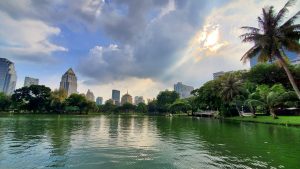
Lumphini, Pathum Wan, Bangkok
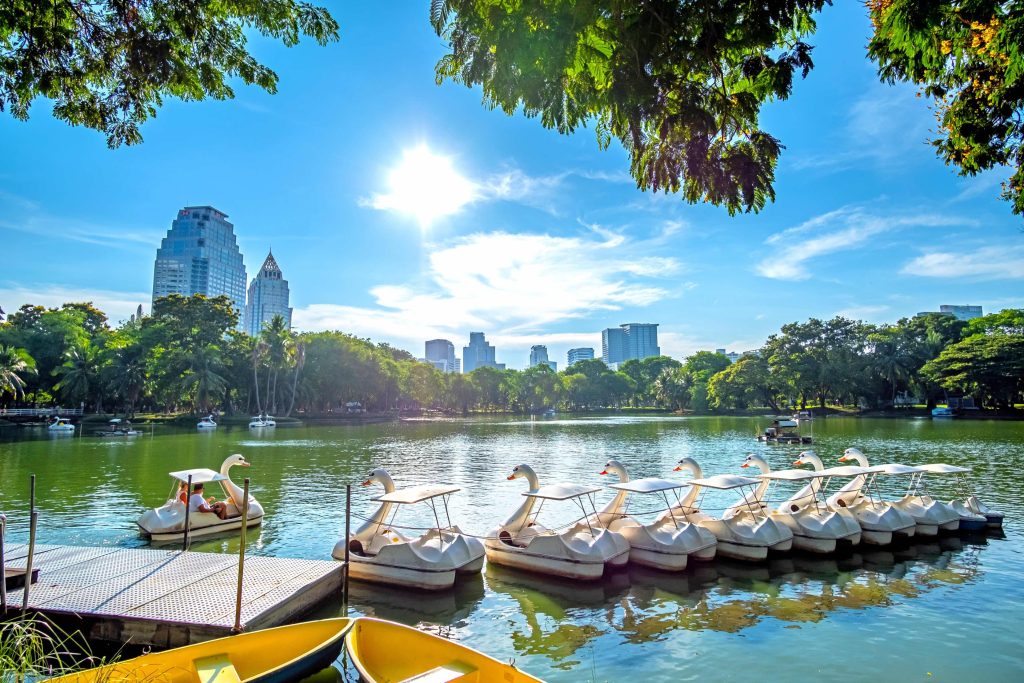
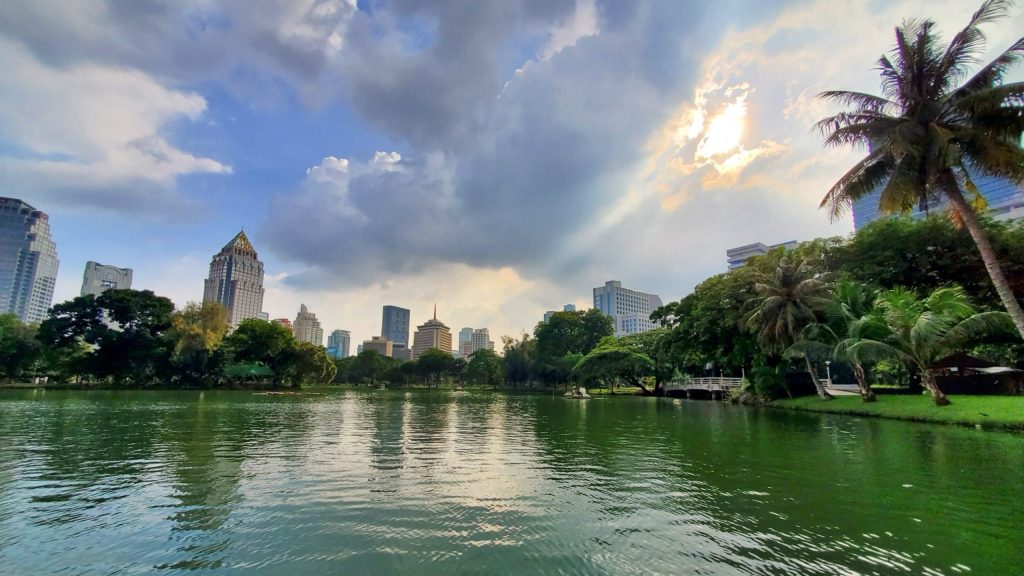
Lumphini Park, also Lumpini or Lumpinee, is a 57.6-hectare park in Bangkok. The park offers rare open public space, trees and playgrounds in the Thai capital and contains an artificial lake where visitors can rent boats. Paths around the park totaling approximately 2.5 km in length are a popular area for morning and evening joggers. Officially, cycling is only permitted during the day between the times of 10:00 am to 03:00 pm. There is a smoking ban throughout the park. Dogs are not allowed, except certified guide dogs only. Lumphini Park is regarded as the first public park in Bangkok and Thailand. The park is the provenance of Lumpinee Boxing Stadium.
Benchasiri Park
Sukhumvit Rd, Khlong Tan, Khlong Toei, Bangkok
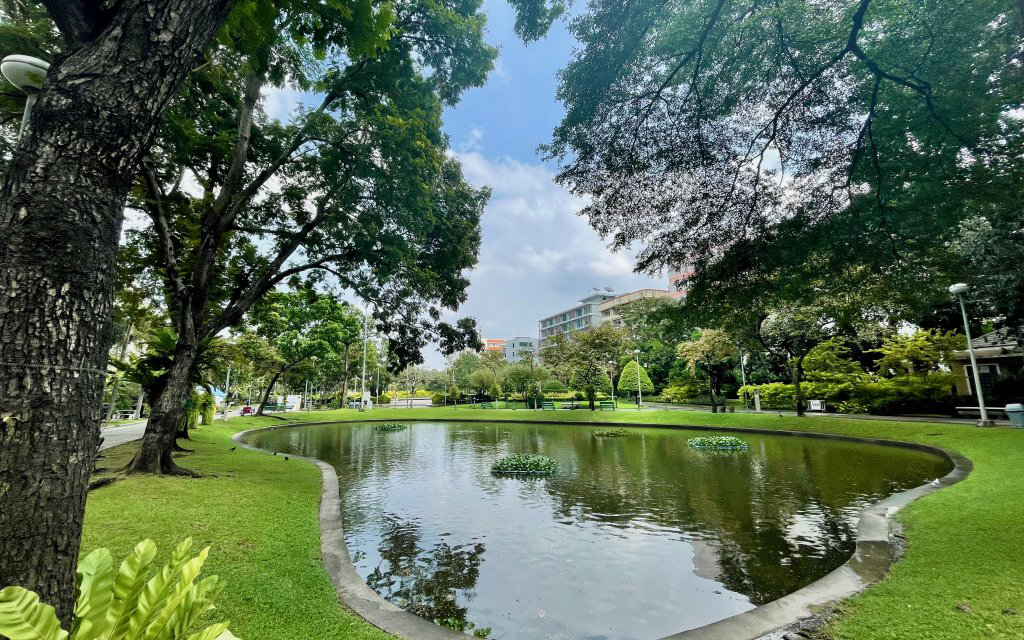
Benchasiri Park is a garden located on Sukhumvit Road. Built on 47,000 m2 next door to the Emporium and Emsphere shopping complex, it serves to commemorate the fifth cycle (sixtieth) birthday anniversary of Queen Sirikit on 12 August 1992. Construction began in 1990 on land which originally housed the Bangkok Meteorological Department until its relocation to Bang Na. Built around an ornamental lake, it contains 12 pieces of contemporary sculpture by Thai artists and is often used for open-air events.
Wachirabenchathat Park
Kamphaeng Phet 3 Rd, Bangkok
Chatuchak is a name of public park in Chatuchak district in Bangkok. The park borders on the Queen Sirikit Park and Chatuchak Park, and it is also the largest park of the complex, bounded by Kamphaeng Phet 3 road and Kamphaeng Phet 2 road with Soi Nikhom Rotfai Sai 1 near PTTHead Office and Ministry of Energy. It is one of the most popular parks in Bangkok.
Formerly being the State Railway of Thailand (SRT)’s golf course, the 60.0 ha plot of land was converted into a public park for recreational activities and doing exercises of the people living in the vicinity. Its name means “Vajira’s 50”, since it was made on the occasion of His Majesty King Vajiralongkorn (Rama X)’s 50th birthday in 2002 while he was still the Crown Prince of Thailand.
Some parts of the old golf course were conserved for children’s golf practices. The park is commonly used for biking. It has a winding three-kilometer track for walking and biking around the park. At the start of bike track, there is a rental shop where visitors can rent bicycles for riding. Near the bike track, there is a lake where people can rent paddleboats to go around the lake. In the park, there is a beautiful butterfly garden and insectarium for visitor’s relaxation and education. The other interesting point is a miniature town. The town consists of Bangkok’s famous buildings and tourist attractions in scaled-down version. It was created for children to learn about traffic rules by riding a bicycle in this area. Some parts of the area used for sporting ground, swimming pool and camping site to those interested can use for bird watching activity as there are plenty of big trees in the park which creates good natural habitat for various kinds of birds.
Suan Luang Rama IX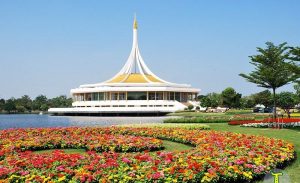
Chaloem Phrakiat Ratchakan Thi 9 Rd, Prawet, Bangkok
Suan Luang Rama IX, also referred to as (King) Rama IX Park, is a public park in Bangkok‘s Prawet District. With an area of 80 ha, it is the largest park in the city.
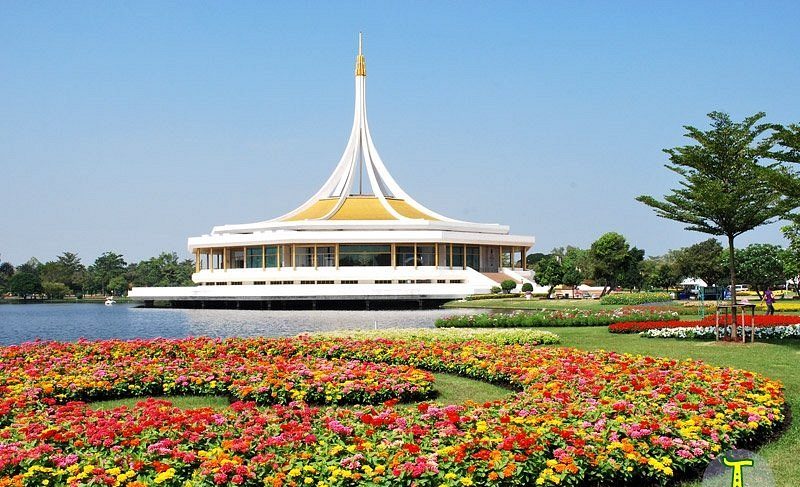
The park was built to celebrate King Bhumibol Adulyadej‘s sixtieth birthday in 1987, and was opened by the King on 1 December that year. It features extensive botanical gardens, a lake, and a pavilion housing exhibits in honour of the King. The park is managed by the Suan Luang Rama 9 Foundation. The “Phanmai Ngam Aram Suan Luang Ror Kao” (Beautiful Flora in the Suan Luang Rama IX Park) fair is held annually here in December since 1987, the year it was founded. The park is the namesake of the Suan Luang Rama IX MRT station on the Yellow Line, which opened in 2023.
Santiphap Park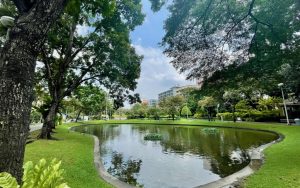
Ratchawithi Rd, Thanon Phaya Thai, Ratchathewi, Bangkok
Santiphap Park, “Peace Park”, is an 8-acre park in Bangkok, Thailand. It is located between Ratchawithi Roadand Rang Nam Road in Ratchathewi district.
The land on which Santiphap Park is built is leased from the Crown Property Bureau by the Bangkok Metropolitan Administration (BMA). It was previously the site of subsidized housing overseen by the National Housing Authority. The BMA obtained a 30-year lease, beginning in October 1990. Construction on the park began in 1997.
Santiphap Park was opened to the public on August 18, 1998. The name Santiphap, meaning “peace”, as well as the date of the park’s opening, commemorate the end of World War II, which took place 53 years earlier.
The dove is the symbol of Santiphap Park. A blackened bronze sculpture situated in the park’s central pond depicts a dove carrying in its beak an olive branch with five blossoms, representing the spread of peace throughout the world. The sculpture is based on a drawing by Pablo Picasso. The entrance signs to Santiphap Park are a facsimile of the handwriting of Buddhadasa Bhikkhu, a renowned Buddhist monk, philosopher and pacifist.
Over 30 species of birds have been recorded in the park since its creation. Birds most often seen or heard there: feral pigeon, spotted dove, zebra dove, plaintive cuckoo, common koel, coppersmith barbet, Asian palm-swift, streak-eared bulbul, black-naped oriole, large-billed crow, oriental magpie-robin, pied fantail, black-collared starling, Asian pied starling, common myna, white-vented myna, olive-backed sunbird, scarlet-backed flowerpecker, Eurasian tree sparrow. Common winter (October–March) visitors: barn swallow, red-breasted flycatcher, inornate warbler. Species which are seen there less often (but all year round): striated heron, Javan pond-heron, little egret, painted stork, house swift, common iora, common tailorbird, yellow-vented bulbul, red-whiskered bulbul, house sparrow. Less common winter visitors: Chinese pond-heron, ashy drongo, brown shrike, Asian paradise-flycatcher. In the wasteland on which the park was later constructed, white-breasted waterhen, black-capped kingfisher, and verditer flycatcher were also recorded. Much more unusually for central Bangkok, orange-headed thrush and laced woodpecker have been recorded in a quieter condominium garden 50 m from the park.
Santi Chai Prakan Park
Phra Athit Rd, Chana Songkhram, Phra Nakhon, Bangkok
Santichaiprakarn Park is a small urban park of about 3 acres in Bangkok located on the ending phase of Phra Athit Road, Chana Songkram Subdistrict, Phra Nakhon District east bank of Chao Phraya River at mouth of Khlong Bang Lamphu (Bang Lamphu Canal) in the area of Bang Lamphu. Opposite to Rama VIII Park in Thonburiside. The park was built on the 72nd anniversary of King Bhumibol Adulyadej(Rama IX) on December 5, 1999. The king gave its name, meaningful “Signs of the Victory of Peace”. Subsequently, the government granted Bangkok Metropolitan Administration (BMA) to act on February 21, 2000.
The park houses the Santichaiprakarn Throne Hall and Phra Sumen Fort, built during the reign of King Phutthayotfa Chulalok (Rama I) since early Rattanakosin era, and the district’s last mangrove apples, after which the area Bang Lamphu is named (mangrove apple called in Thai lamphu). The last mangrove apple of Bangkok within Santichaiprakarn Park on the Chao Phraya River
It is often used as a venue for watching Royal Barge Procession each time.